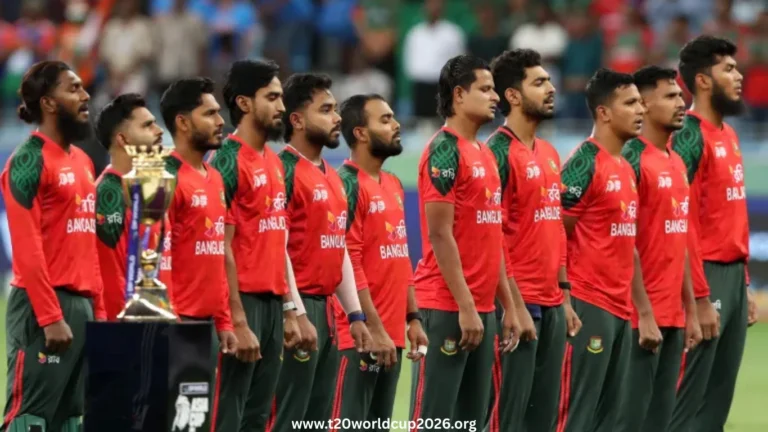
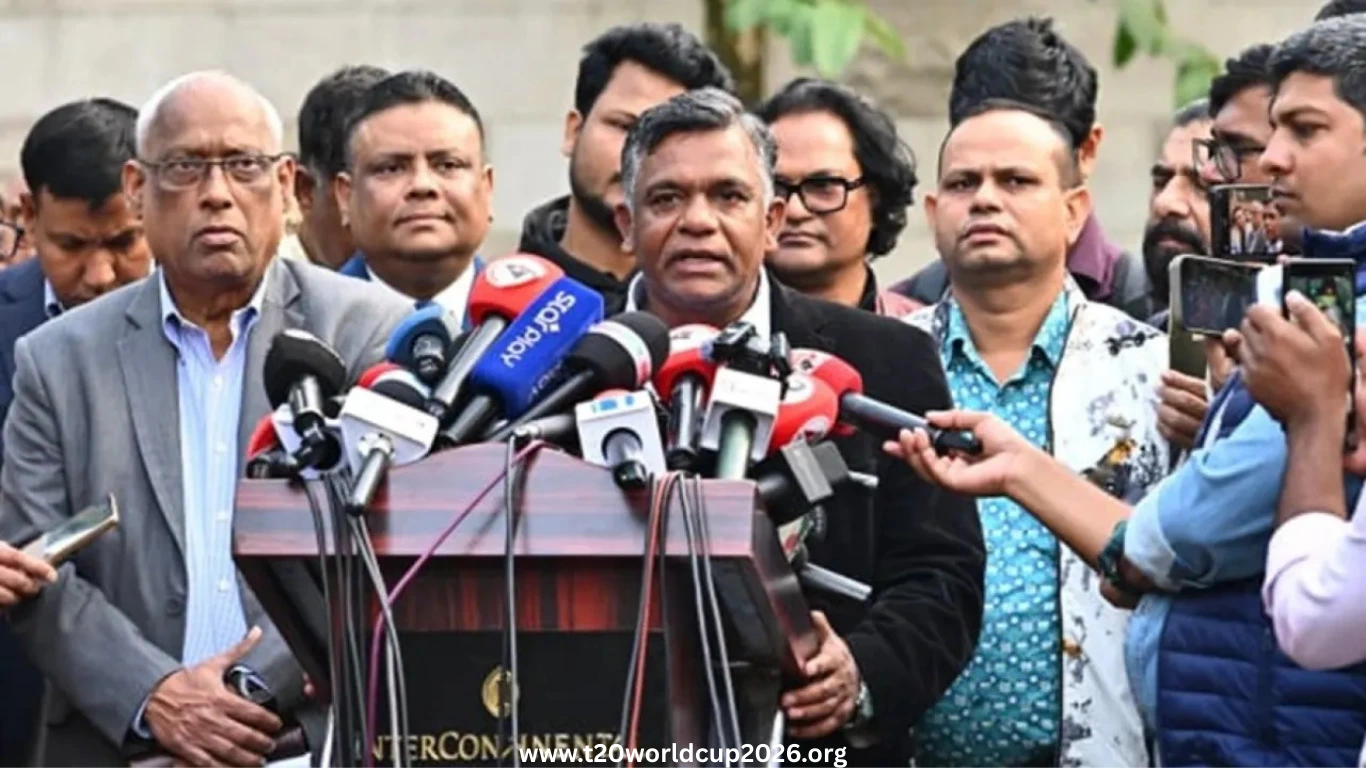
Bangladesh Cricket Board (BCB) president Aminul Islam has openly accused the International Cricket Council (ICC) of applying double standards in its handling of venue-related concerns, drawing a direct comparison between Bangladesh’s unresolved issue ahead of the T20 World Cup 2026 and India’s accommodation during the 2025 Champions Trophy.
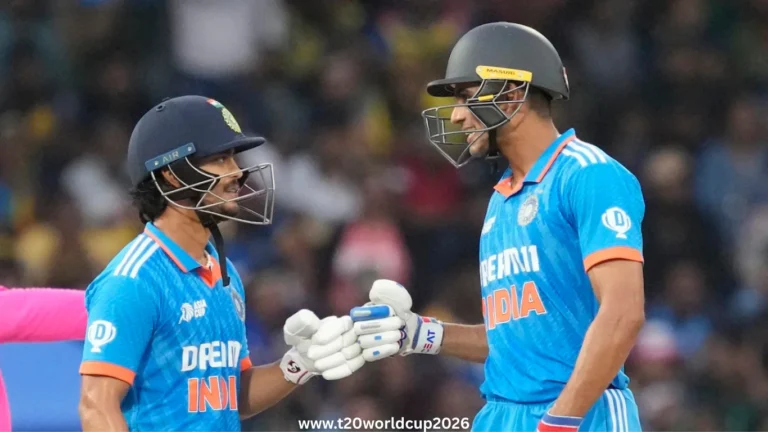
Speaking to the media in Dhaka on Thursday, Aminul questioned why Bangladesh’s request to shift its T20 World Cup matches away from India was rejected, while India had previously been allowed to play all of its Champions Trophy games in Dubai, citing similar travel concerns.
“The ICC keeps referring us to incidents from 1996 and 2003,” Aminul said. “But when a country refused to travel for the Champions Trophy last year, the ICC arranged a neutral venue. That team played all their matches at one ground, stayed in one hotel. It was a privilege.”
Bangladesh firm on security stance
Bangladesh’s position remains unchanged: the team does not wish to travel to India due to security concerns, a stance that has been backed by the country’s government following high-level discussions involving national players, board officials, and the sports ministry.
Despite the ICC insisting there is “no credible security threat” to Bangladesh in India, Aminul made it clear that the board is unwilling to compromise.
“We don’t want to play in India,” he said. “We are ready to play the World Cup in Sri Lanka. If a hybrid model can exist for others, why not for us?”
Hybrid model debate resurfaces
The dispute has once again put the ICC’s hybrid model under scrutiny. During the 2024–27 cycle, the ICC approved a hybrid arrangement allowing India and Pakistan to avoid travelling to each other’s countries in global tournaments. That model was first implemented during the 2025 Champions Trophy, where India played all its matches in Dubai instead of Pakistan, the official host.
The same approach was later used in the 2025 Women’s ODI World Cup, with Pakistan playing its matches in Sri Lanka.
However, the ICC has so far refused to extend similar flexibility to Bangladesh for the 2026 T20 World Cup, which is being co-hosted by India and Sri Lanka. While Sri Lanka is officially listed as a co-host, it has already been designated as the neutral venue for any India–Pakistan fixtures.
“We are calling Sri Lanka co-hosts, but in reality they are part of a hybrid setup for specific teams,” Aminul said. “We asked for the same option. It was denied.”
ICC draws a firm line
In a statement released after its board meeting, the ICC said altering the schedule at this stage would set a dangerous precedent.
“The ICC Board noted that it was not feasible to make changes so close to the tournament,” the statement read, adding that agreeing to Bangladesh’s request in the absence of a credible security threat could undermine the neutrality and sanctity of future ICC events.
The governing body has also issued a clear ultimatum: if Bangladesh refuses to travel to India, it will be replaced by another team at the T20 World Cup.
Aminul dismissed the 24-hour deadline reportedly given to the BCB.
“A global organisation cannot give a deadline of one day,” he said. “We will keep communicating. We will keep fighting.”
Wider implications for world cricket
Beyond the immediate standoff, Aminul warned that excluding Bangladesh would reflect poorly on the global game.
“We are proud of Bangladesh cricket, but we are doubtful about world cricket,” he said. “Cricket is going to the Olympics in 2028. When a cricket-loving country of 200 million people is denied participation, it sends the wrong message.”
Bangladesh’s stance has already found sympathy in some quarters, with Pakistan officially backing the BCB’s position earlier this week. That support adds another layer of political complexity to a tournament already navigating strained regional relations.
What happens next?
With the ICC standing firm and Bangladesh refusing to budge, the situation appears headed toward a high-stakes showdown. A last-minute compromise remains possible, but time is running out.
If no agreement is reached, the T20 World Cup 2026 could face the unprecedented scenario of a qualified Full Member being replaced over a venue dispute — a move that would raise serious questions about consistency, governance, and fairness at the highest level of international cricket.
For now, Bangladesh insist they are not backing down. Whether the ICC blinks first could shape not just this World Cup, but how future global tournaments are run.